Garmin Reports 2024 inReach Data
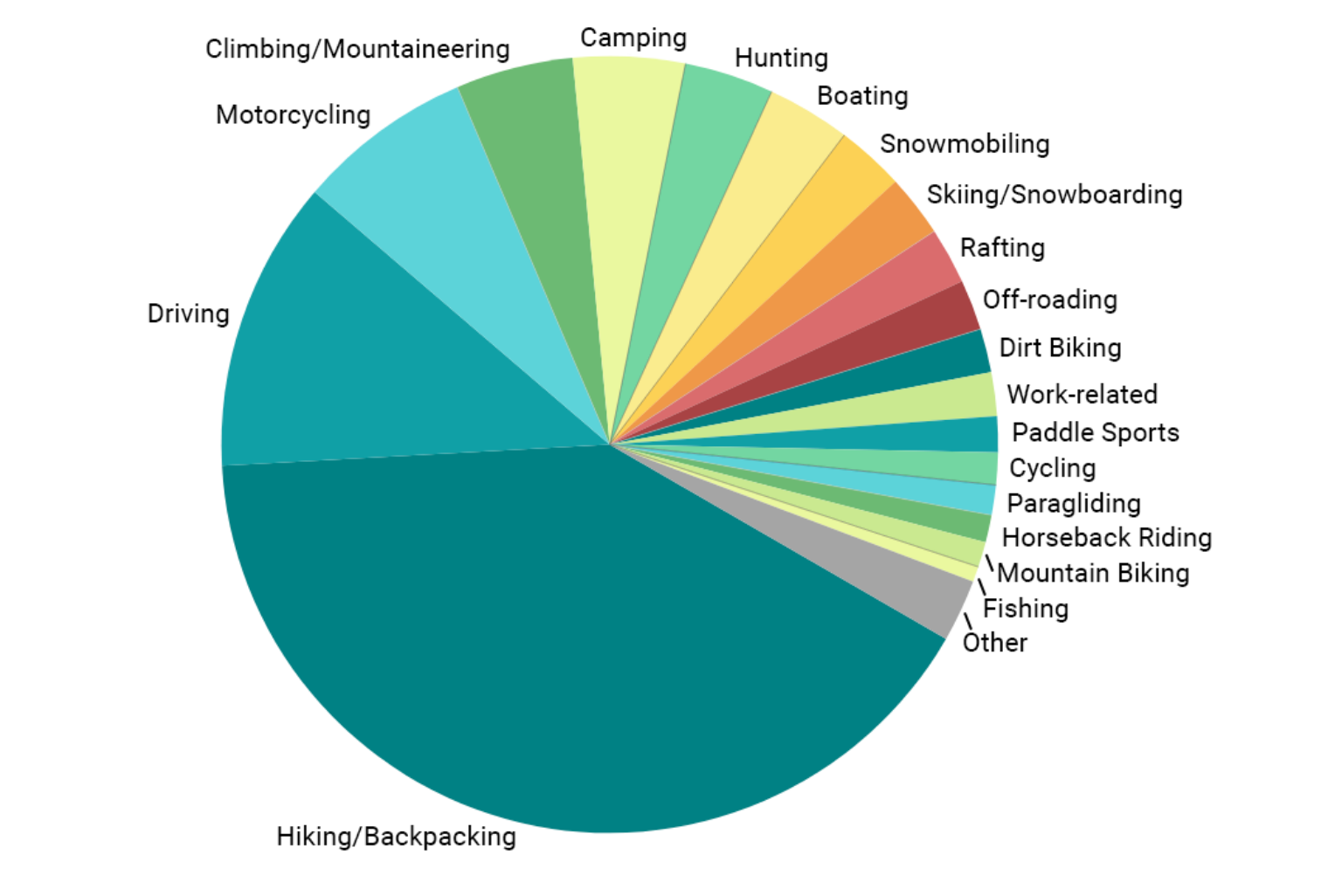
Source: Garmin
Many SAR teams have noted the increasing frequency of satellite device activations precipitating callouts, and data from Garmin, which introduced the first inReach device in 2011, backs up that people who recreate in the outdoors are increasingly making use of the devices to call for help when they need it. Garmin reported the highest incidence of SOS activations in 2024 were once again for hikers and backpackers, and the most common reason for triggering the SOS was for injury. In its report on SOS activations of its inReach devices by users last year, hikers and backpackers were followed by driving/motorcycling and those two categories made up just more than half of all activations, Garmin said. The satellite device company said increases were also seen in dirt biking and rafting, as well as camping and mountain biking, which hadn’t appeared before as its own category. Most users were activating their devices for themselves, and that group saw an increase from 2023, but Garmin said almost half of activations were for a party member or a third-party individual who needed assistance. Responses to activations were most frequently helicopters, ambulances and SAR teams, though 12 percent of users were able to self rescue.
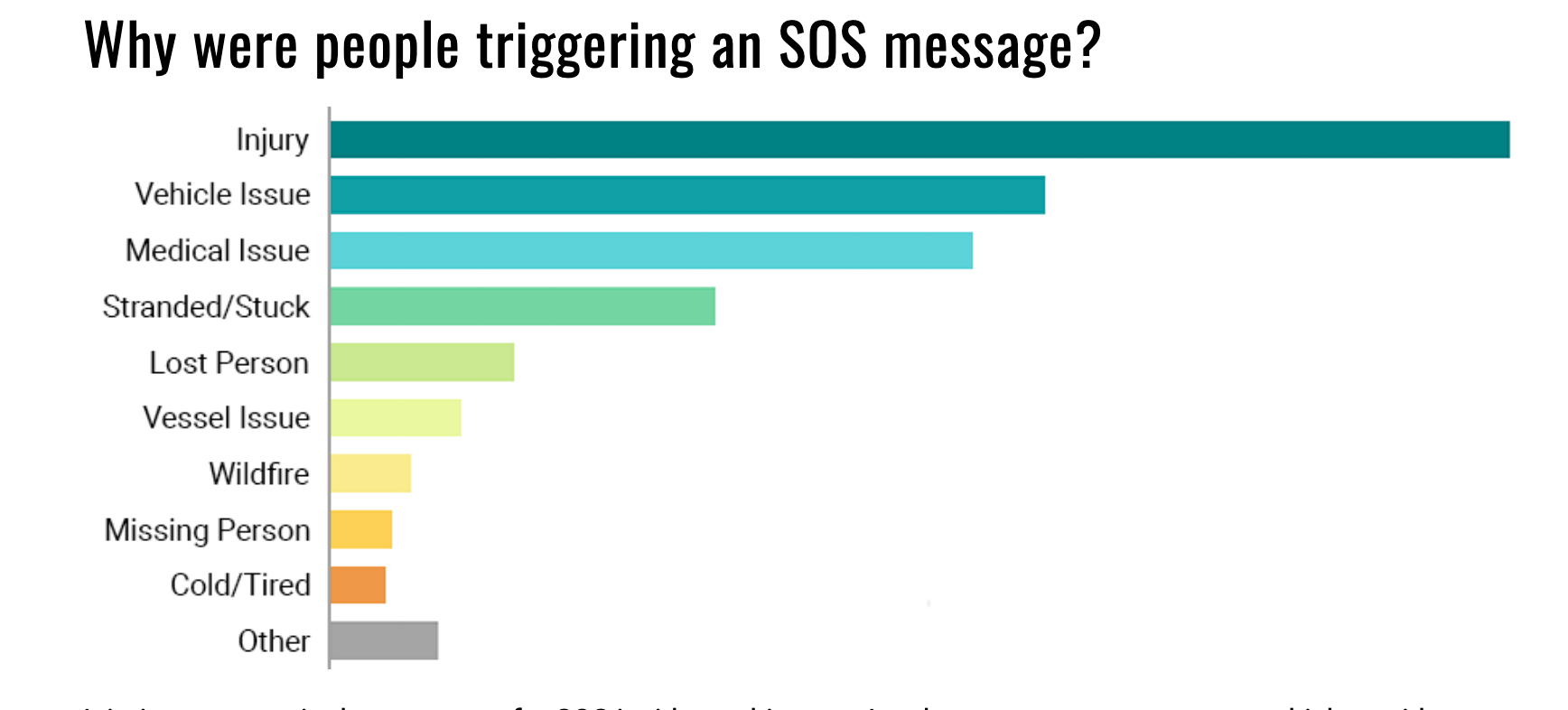
Garmin’s full report can be found here: https://www.garmin.com/en-US/blog/outdoor/2024-inreach-sos-year-in-review/
Study on Psychological Safety and Organizational Belonging Results
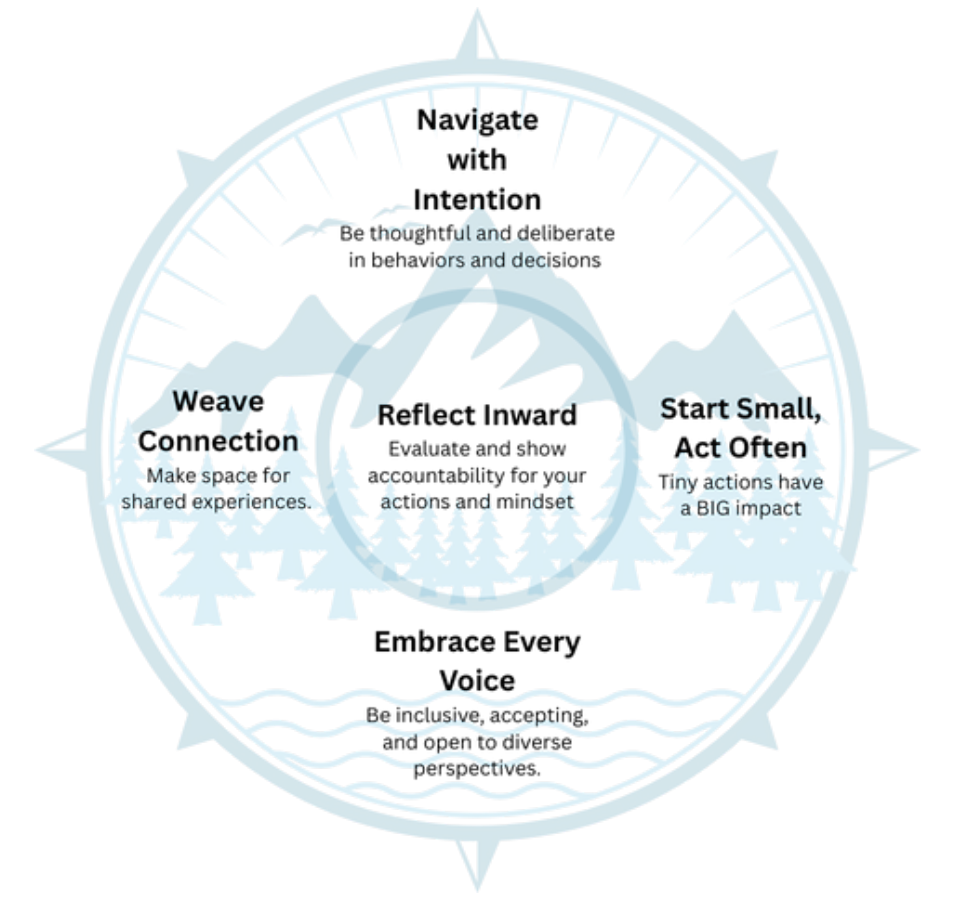
PhD student Sarah Seiler conducted a survey that was included in this newsletter earlier this year as part of her dissertation on high-reliability teams. She got a wide array of respondents and included members of teams across geographic locations. Seiler did the study to help volunteer SAR teams who are dealing with high turnover or difficulty recruiting or retaining members. A high reliability team is defined as one where failure could mean increased risk of death or injury. Seiler’s research led her to list five guiding principles for teams – navigating with intention, start small and act often, embracing every voice, weave connection and check inward.
 Psychological Safety means feeling comfortable speaking up, asking questions or making mistakes without fear of retaliation. Psychological safety isn’t about being nice, Seiler notes, but rather having the courage to challenge ideas and take risks. Burnout is high among search and rescue teams, and higher levels of psychological safety decreases burnout, according to Seiler’s research.
Organizational belonging is the sense that a team member is valued, included and connected to the team, Seiler said in her report. Ninety percent of respondents to the survey were white, and more than two thirds were men, with an average age of 48. Seiler reported that men and volunteers who have only been a member of one team report higher psychological safety and organizational belonging.
Seiler noted that weaving connection, or building personal relationships within the team, can be challenging but is very important in helping members feel included and engaged. Teams should work to create opportunities for connection, both with members and with the community. Seiler writes in her report: “Interpersonal interactions between leadership, team members, and the community are important to building the sense of connection and trust, but the efforts to build connection do not need to be grand and sweeping.”