As small unmanned aircraft systems (sUAS) became more and more common in SAR throughout California, individual teams and agencies have been working hard in developing drone programs, training pilots, purchasing equipment, and gaining operational experience. Many teams have been producing impressive results with drones on missions by keeping SAR ground teams out of dangerous terrain or situations, by covering large open areas allowing ground searchers to focus on other terrain, and by utilizing computer assisted vision to identify clues that might have otherwise been missed. Despite this, as of early 2025, there were few opportunities for SAR operators from different organizations in California to train together, compare procedures, share lessons learned, or establish common frameworks for effective drone use on SAR missions.
One significant and extended ‘campaign’ search operation in the Bay Area in the spring of 2025 brought the value of collaboration into focus. Over multiple operational periods, ground, dog, tracking, and drone teams from around Northern California responded to assist in the search for a missing hiker in coastal hills along the San Francisco peninsula. More than 100 searchers put in huge efforts on more than a dozen operational periods. Drone teams provided valuable coverage of areas where aircraft could operate effectively and safely, while also highlighting the limitations of the technology. The dense redwood and oak canopy restricted flight operations in many locations and reinforced the reality that drones are only one tool in any search manager’s toolbox.
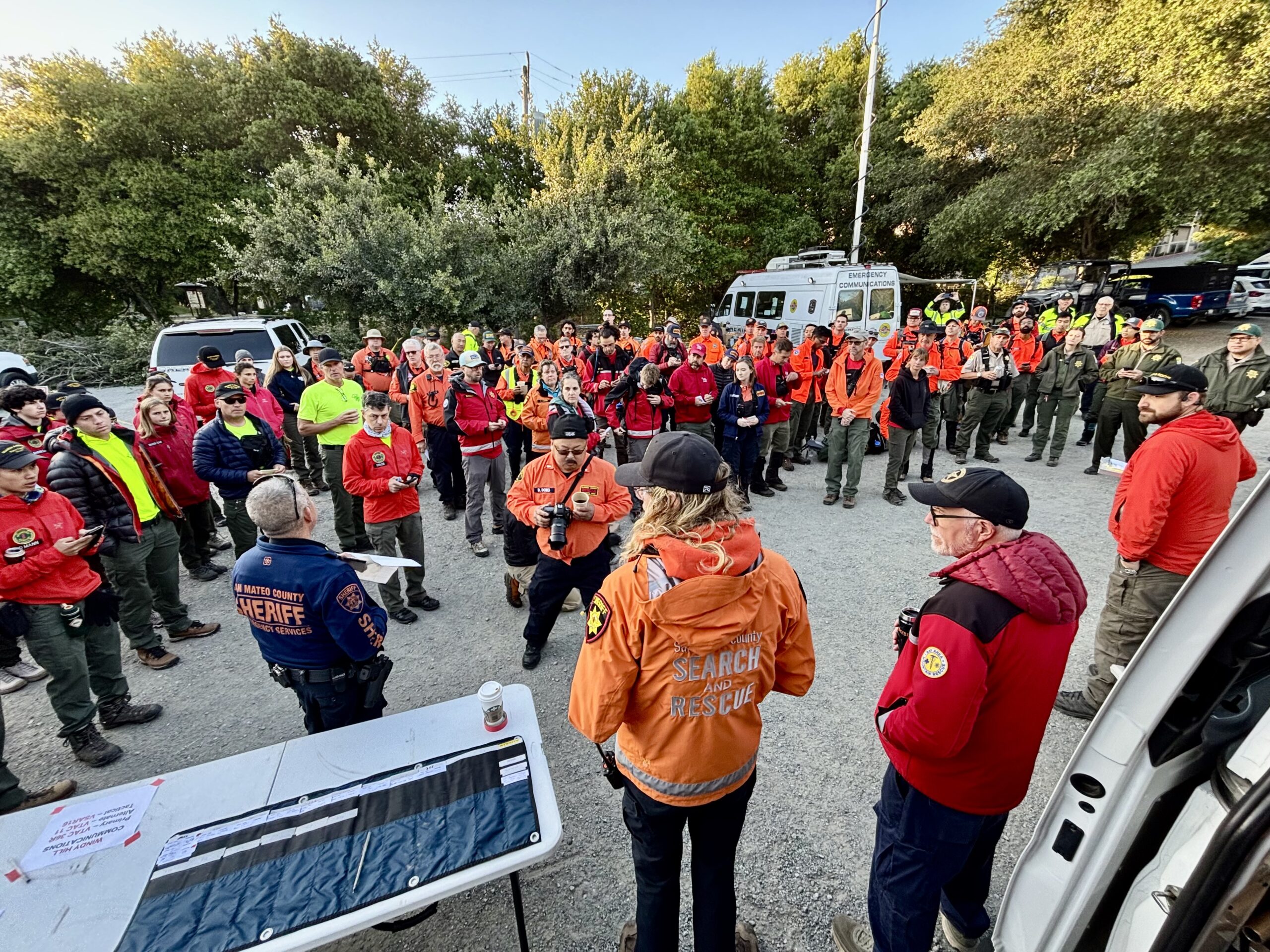
Extended search in San Mateo, Calif.
For the author, this mission marked an inflection point for the use of sUAS for SAR missions. It was the first time I used computer assisting software, Eagle Eyes Search, to aid in anomaly detection. It was the first time I collected massive amounts of data; many missions I now fly I expect a few hundred gigabytes of data to be the norm…..per pilot! It was the first time I flew to specific locations that ground teams wanted a closer look from above. While this sounds like an easy task, matching a ground searcher description with a computer view from CALtopo to a screen view of a flying drone was harder than I expected at first. And importantly, it was one of the first times I worked with multiple other agencies to coordinate assignments, authorizations, clue analysis, deconfliction, and flight tracks.
The mission brought together a large number of experienced sUAS personnel from different organizations who shared common goals and challenges. Countless conversations during and after the mission raised questions familiar to many MRA members. How could we train together more often? How could we share best practices? Could we develop common expectations for qualifications and operations? Is there a common glossary of terms and standard set of search tactics? How can we best write and communicate search assignments for drone teams? How could we learn from each other’s successes and areas for growth? The answer, in many ways, was sitting in front of us. The Mountain Rescue Association had been providing a successful model for collaboration, peer review, and professional development for decades.
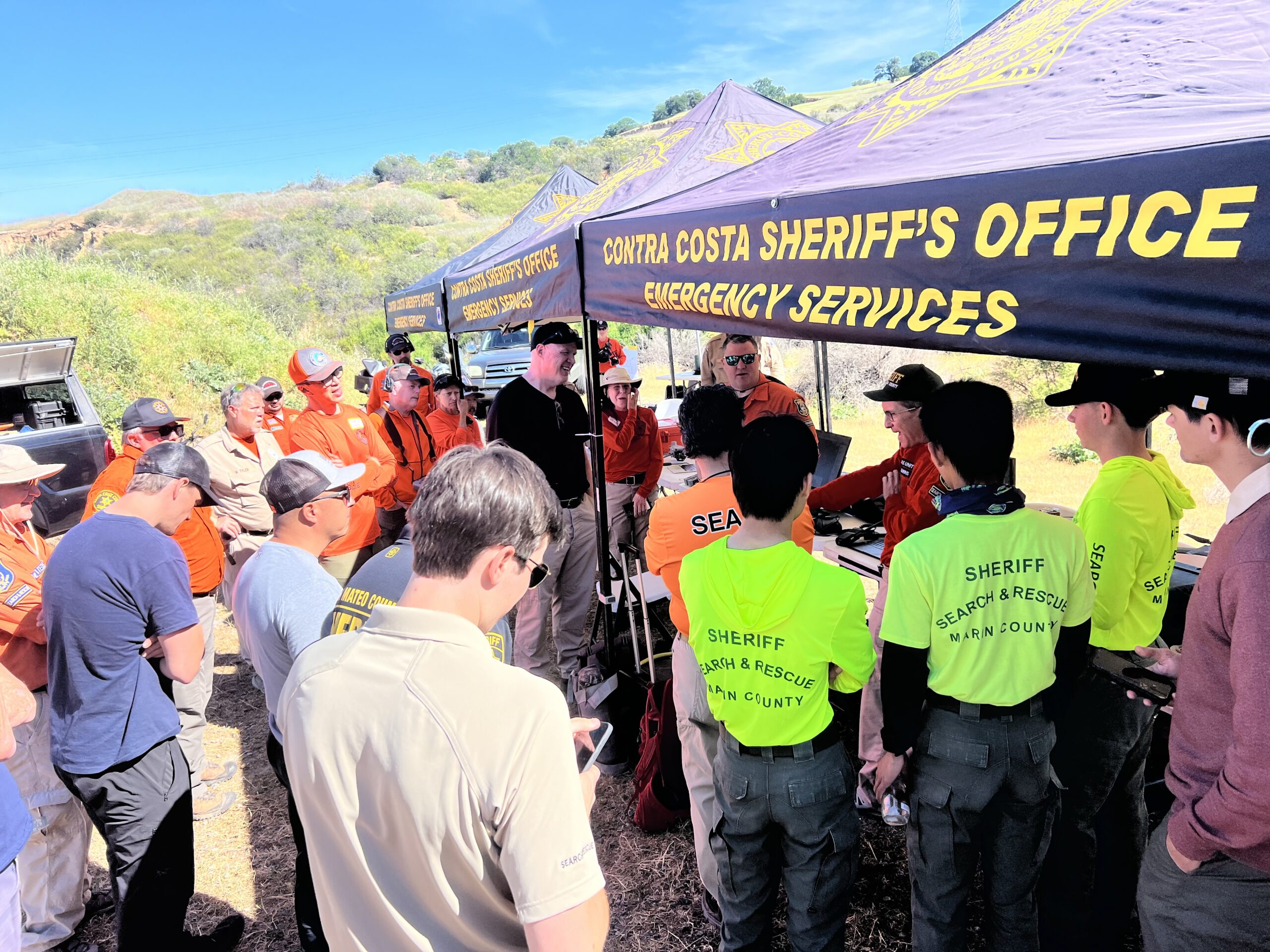
Photo by Scott Van Ausdal

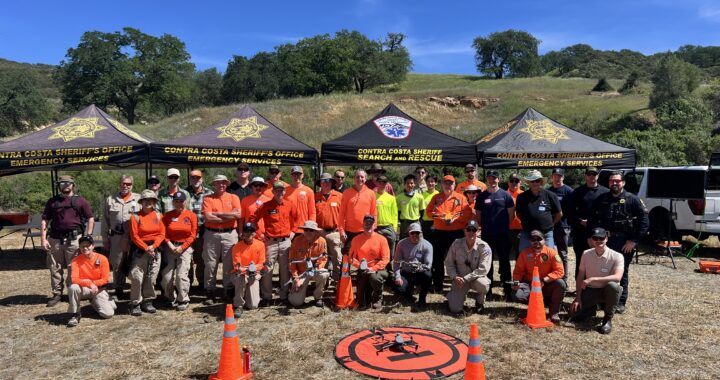
The California Drone SAR Coordination Group was formed in the summer of 2025. The group’s first year has focused on three primary efforts: training, standardization, and communication. One year later, the results have exceeded expectations. What began as a conversation among a handful of operators has grown into a network representing approximately 40 agencies across 26 California counties. We also have relationships with teams in Oregon, Colorado, and Texas. We have an active Slack Channel where operators can pose both broad questions about programs and policy, along with specific queries about software, drone troubleshooting, and countless other issues. On searches requiring multiple sUAS resources, collaboration between teams has become increasingly common. Most SAR drone operators in the state now have some personal and experiential common connection with others in the California Drone SAR Coordination Group. Search managers and incident commanders have a better understanding of what capabilities exist throughout the state. Operators know who to call, what resources may be available, and what limitations exist. Requests for assistance are becoming more informed, and mutual aid responses are becoming more efficient.In-person cross training has proven especially valuable. Two Northern California events here in the Bay Area hosted by Contra Costa SAR, another hosted by El Dorado SAR, and a Southern California event hosted by San Bernardino SAR teams brought together operators from a wide range of organizations and experience levels. Beyond the flight operations themselves, these events created opportunities to compare techniques, discuss mission lessons learned, evaluate equipment, and build the professional relationships that make future cooperation possible.
The development of a shared sUAS training task book has helped establish common expectations for proficiency and operational readiness. While agencies maintain their own training standards and qualification processes, the task book provides a shared framework and a common language for discussing capability.
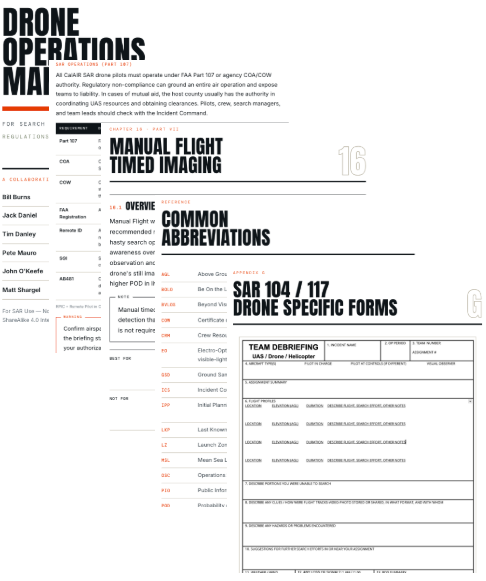
Examples from CA Drone Manual
Perhaps the most significant accomplishment has been the completion of the first edition of the California Drone SAR Operations Manual. It is open to all SAR teams to use and share with others in the SAR community. An online version can be found at www.sardrone.org. The document represents the collective experience of drone pilots from throughout the state and provides guidance on mission planning, operational coordination, safety considerations, and best practices. It will continue to evolve, but it represents an important step toward capturing lessons learned and sharing them with the broader SAR community.
The greatest success has been the development of a culture of collaboration. The MRA has long understood that peer review, shared experience, and professional relationships raise standards across all participating teams. The California Drone SAR Coordination Group has benefited from the same principle. When operators regularly train together, discuss challenges openly, and learn from one another’s successes and mistakes, everyone improves. The operational benefits of these relationships are beginning to appear on missions throughout California.
The California Drone SAR Coordination Group did not succeed in our first year because of sweet aircraft, exotic sensors, hot software, or innovative equipment. It succeeded because experienced rescuers from different organizations chose to share information, train together, review each other’s work, and collectively raise the standard of practice. Those principles are not new. They have been central to the Mountain Rescue Association for decades. Looking back, it is difficult not to see the influence of the MRA in this effort. The organization has spent decades demonstrating that collaboration between teams can raise standards and improve outcomes for everyone involved.
Matt Shargel has been a SAR volunteer for 21 years. He serves with Contra Costa SAR, the Bay Area Mountain Rescue Unit, and is the current leader of the California SAR Drone Coordination Group.