When the Tahoe Nordic Search and Rescue team responded to the deadly avalanche in Lake Tahoe in February, they couldn’t have anticipated the wide-reaching impact it would have on the team. TNSAR responded, along with Nevada County’s Search and Rescue team, rescuing six survivors and later assisting with the recovery of nine deceased skiers, including the wife of one of TNSAR’s members. It was the worst avalanche disaster in the U.S. in 40 years. For the rescuers and teams involved, it was the beginning of a long road to recovery.
“This tragic incident was quite the catalyst to provide emotional support services for members,” said Sarah Krammen, president of TNSAR. She noted that in the past, incidents may have involved one or two people and the Placer County Sheriff’s office would offer support as needed. The avalanche involved so many rescue personnel that additional resources were necessary. “We had therapists and healers and so many other amazing resources reaching out, offering their pro bono assistance. That has in turn jumpstarted our thinking to offer our team a number of different resources for them to choose from.”
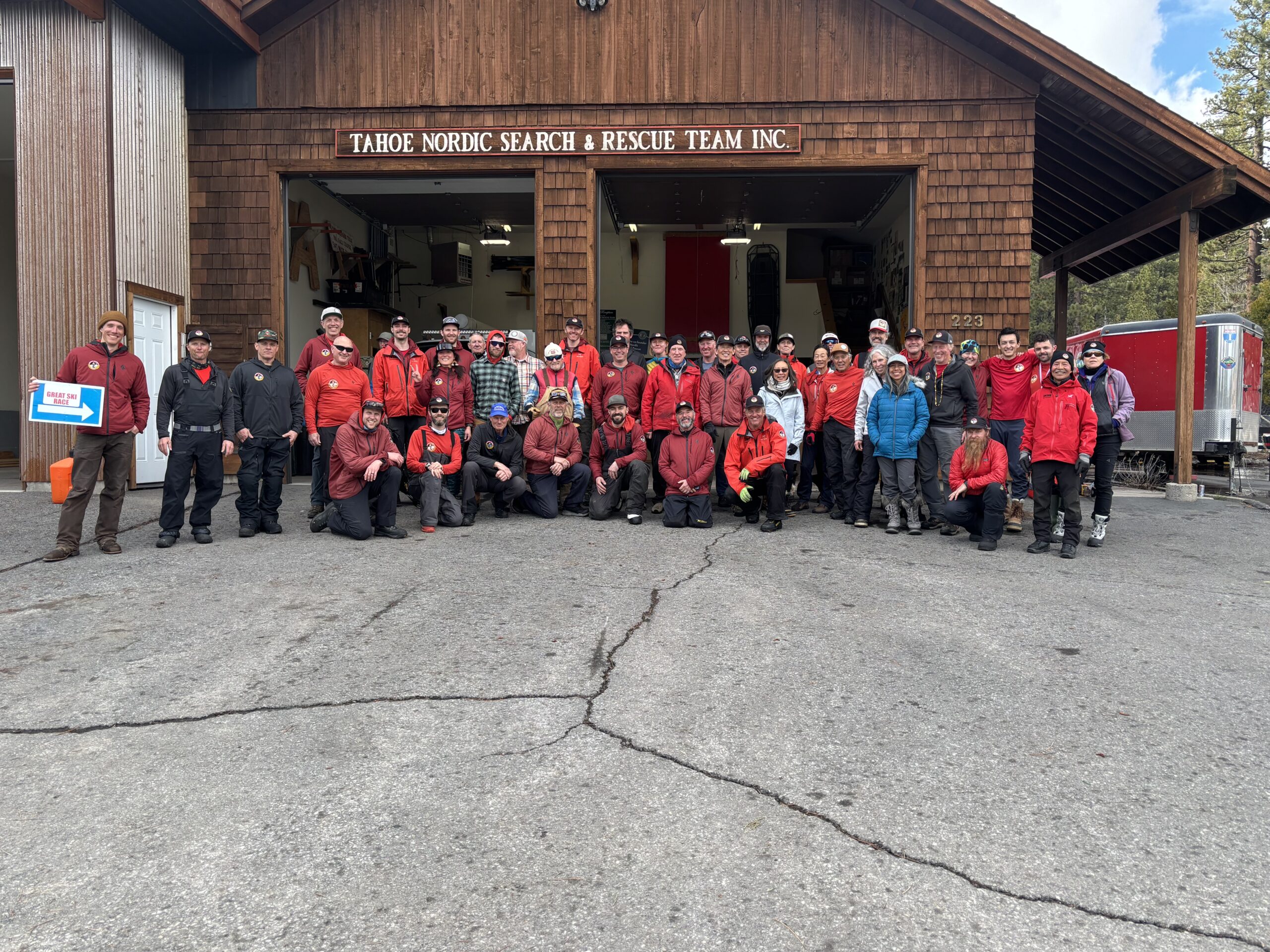
Tahoe Nordic team members at the team garage.
Nevada County’s SAR team also provided a variety of resources to its members, from formal, structured sessions to debrief to more informal gatherings to just talk and spend time together, according to Scott Montgomery, Nevada’s Mountain Rescue Team Manager. Montgomery said the team has resilience training integrated into its new member training and also as part of ongoing team training.
Building systems and processes to support rescuers—particularly those regularly exposed to stress, trauma, and loss—has become an important operational priority for MRA teams. With mission cadence high and rescuer burnout a real risk, teams are investing in tools to assist members in dealing with the mental stress of the job. When a team has a particularly difficult call, the impact on members can be significant. A 2023 cross-sectional analysis of traumatic stress and burnout in search and rescue found that nearly 54% of surveyed SAR volunteers were at risk for burnout, and 25.5% reported experiencing intrusive trauma symptoms, according to a report in the Journal of Emergency Medical Services. The same study concluded that SAR volunteers face mental health risks comparable to those of other first responders. According to the National Institutes of Health, approximately 80 percent of first responders experience traumatic events on the job. It is estimated that nearly 400,000 first responders in the United States have been negatively impacted by exposure to trauma.
“In the early days, we didn’t do much around emotional support,” said Doug McCall, Chairperson of Seattle Mountain Rescue. Starting in 2019, McCall said, SMR began to change its approach by adding several canines as emotional care dogs, which sparked a broader conversation around resilience. “It has since evolved quite a bit to where we view things from a full resilience perspective and it generally begins with our new recruits.”
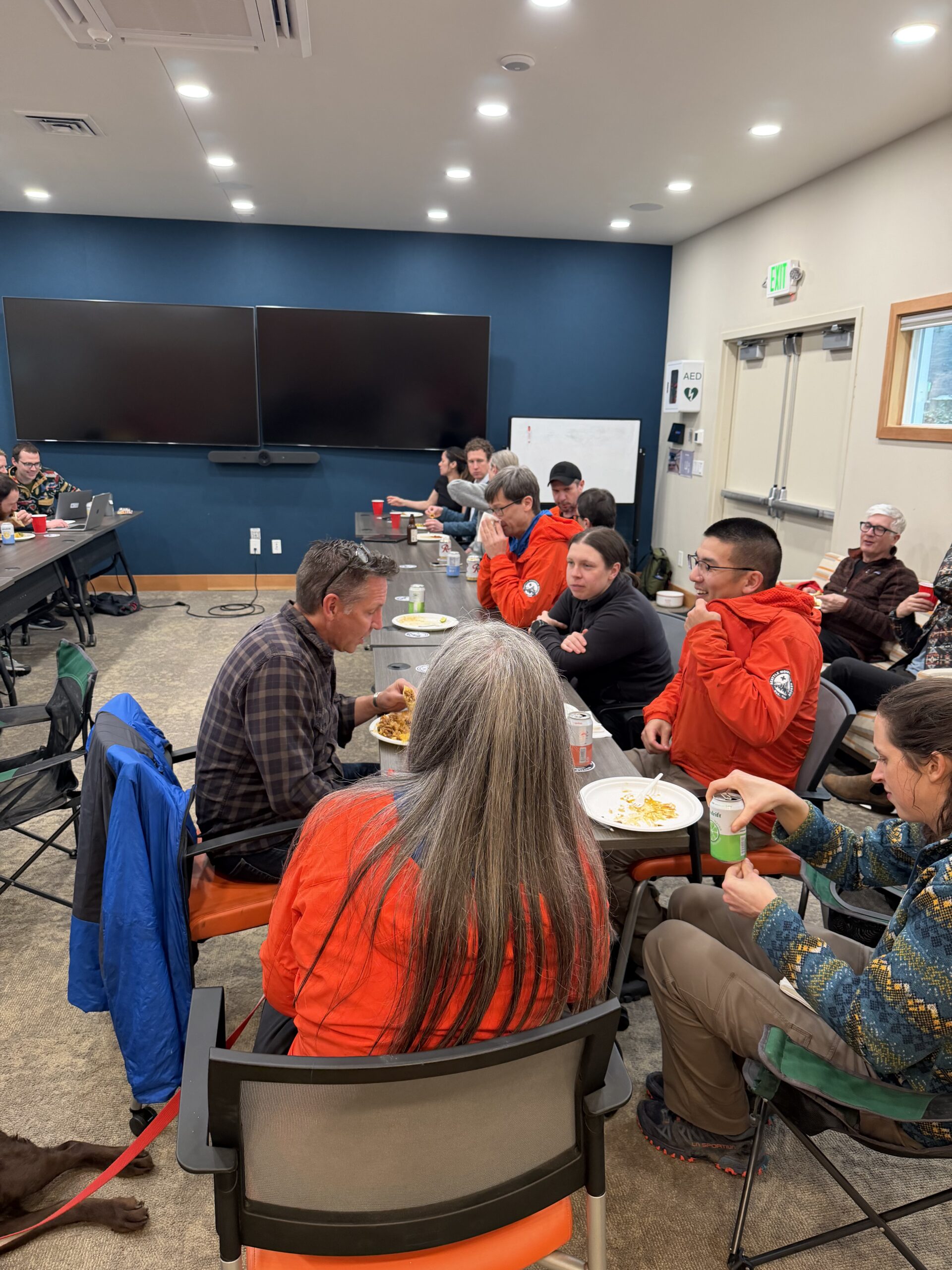
Seattle Mountain Rescue members spend time together, often over a meal.
Many teams are also discovering that effective peer-based solutions can be implemented at relatively low cost. Katy Stockton of Yosemite Search and Rescue and the Responder Alliance said YOSAR provides structured emotional support services, including sessions at the beginning and end of each season, working through Responder Alliance materials and reviewing the stress continuum. “We ask questions like, ‘How ready are you to respond?’ and ‘What are your current stress levels?’ This helps us identify whether someone is in the green, yellow, or red zone—and whether they may need additional support,” Stockton said.
While many teams have formal programs and processes in place to support the emotional well-being of their members, they also recognize simpler, more informal approaches that can be equally effective. Gathering for meals, spending time outdoors, and connecting through shared activities can play a meaningful role in maintaining team cohesion and resilience. “As much as possible, we try to do team-building activities that are not training-related, but instead are designed to create bonds and relationships—especially during periods of downtime,” said Ciara Cox of Marin County Search and Rescue.
Other teams share that perspective. “For us, the community aspect is really huge,” said Stockton. “We all live together during the season. After a hard rescue, we might go for a bike ride, jump in the river, or return to camp to cook and eat together. Sometimes we talk about the callout, and sometimes we don’t—but having that shared space is really helpful.”
For Seattle Mountain Rescue, food also plays a meaningful role. “We’ve learned that breaking bread—or pizza, as is often the case—is very helpful,” McCall said. “We think of our building as a safe zone, and sharing a meal together is therapeutic.”
While teams vary in their specific approaches, a common theme is emerging across the SAR community: supporting emotional well-being is no longer optional; it is essential. Many teams view their current efforts as just the beginning, with a growing commitment to expand and refine these practices over time. In a field that is defined by service to others, ensuring the resilience of those who respond is becoming a mission in its own right.
Howard Solomon and Kate Patterson are members of Marin County Search and Rescue (Calif.)