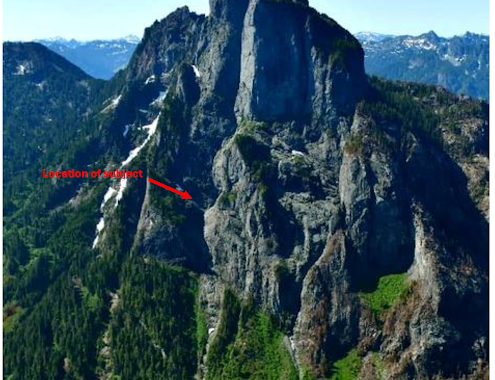
Mount Baring, located on National Forest land in Washington state, is popular with base jumpers across the U.S. The mountain’s north face drops nearly vertically to a meadow below that features a small lake and open areas, enticing high-risk takers with a short hike from the parking lot to the 6,127-foot summit. Over the years, first responders in Snohomish County have been called upon to rescue stranded base jumpers or conduct recovery operations after fatal impacts. All such rescues or recoveries are complex, often multi-day operations.
These joint operations are a combined effort of the Snohomish County Sheriff’s Office, the Snohomish County Volunteer Search and Rescue organization, and Everett Mountain Rescue. Aircrew are members of the Helicopter Rescue Team (HRT), a mix of Sheriff’s deputies and SAR volunteers. Helicopter Rescue Technicians are selected from Everett Mountain Rescue based on their climbing and rigging skills. Both HRT and Everett Mountain Rescue are non-profits, part of the larger Snohomish County Volunteer Search and Rescue organization.
In the early evening of August 19, 2025, the Sheriff’s on-duty Search and Rescue deputy received a report of a base jumper who impacted the north face of Mount Baring after jumping from the summit. The deputy directed the launch of “Snohawk 1”, a Hughes 500-P search helicopter equipped with an infrared camera and pilots equipped with Night Vision Goggles. The pilots were unable to locate the subject or identify his parachute that night.
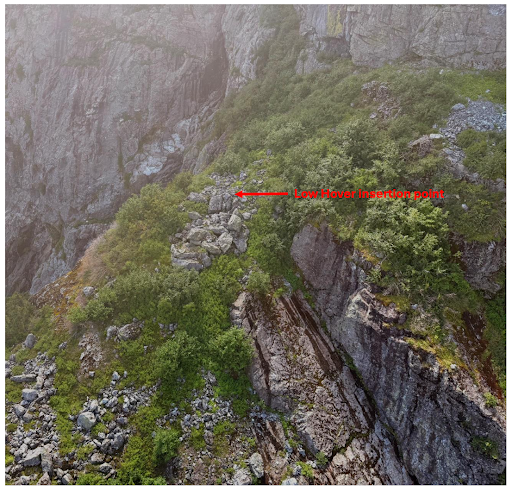
Early the following day, the HRT duty crew launched in “Snohawk 10,” a Bell UH-1H, the Sheriff’s hoist-equipped rescue helicopter. The crew located the subject in a steep couloir at 4,150’. The pilot could not hover directly above the subject due to the proximity of the rock face. The crew identified a ledge approximately 1,000 vertical feet above the subject’s location. This brush-covered ledge provided just enough room to conduct a “low hover” insertion of teams and gear.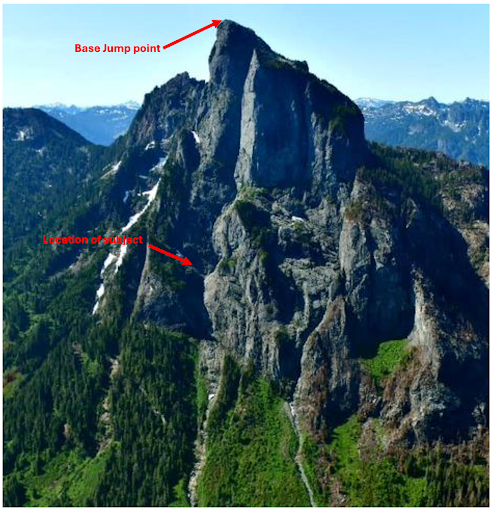
On a subsequent flight that day, the Snohawk 10 crew flew two highly experienced members of Everett Mountain Rescue to assess the terrain and develop a plan to access the subject. The team observed that they could rappel down from the large ledge in two pitches and identified several possible ledges for intermediate anchor locations. Additionally, they confirmed that by staying out of the main couloir, the rappel route would be relatively safe from rockfall due to the clean face and overhanging features protecting the route from above. The team also used the scouting mission to verify the gear that would be needed to access the subject, including a 600’ rope, two 200’ ropes, a bolt kit, a single trad rack, hammer and pins, and ascenders.
The remainder of day two consisted of planning the recovery operation and gathering the necessary equipment. A recovery plan was written by the Chief Pilot, who had years of experience in conducting long-line operations. An earlier base jumper recovery operation required the use of a 325’ long line. Safety of all those involved was emphasized.
On day three of the operation, the helicopter crew transported four mountain rescue members and equipment to the ledge via lower hover insertion. The ledge, flat enough that the team could move around freely, had several small trees that the team used as anchors. Two members stayed on the ledge and managed the top anchor while two members with big wall climbing experience descended towards the subject. One member rappelled towards the subject on the 200’ rope and selected a ledge with good rock for an intermediate anchor. Here, the team installed three bolts to use as an anchor and anchored the bottom end of the 200’ rope to fix it to the upper section of the wall. They then fixed the top of the 600’ rope to this anchor. They continued to rappel from the intermediate station on the 600’ rope, adding an additional bolt as a redirect point to better access the subject. Rope protection was used at several points where the rope touched the rock.
The team rappelled approximately 550’ down from the intermediate anchor to the bottom of the couloir where the subject was located. The area was flat enough that they came off rappel to package the subject and connect the packaging (Bauman Bag) to the end of the 600’ rope. Next, the two members at the subject began the strenuous journey back up to the insertion point. They ascended one at a time using ascenders and progress capture devices up approximately 250’ of free-hanging rope, then about 150’ of vertical rock. Once they arrived at the next section, approximately 150’ of 5th-class terrain below the intermediate station, they continued up by simul-scrambling, staying five to ten feet from each other to minimize potential hazards from loose rock. Overall, the ascent from the subject to the intermediate station took two and a half hours.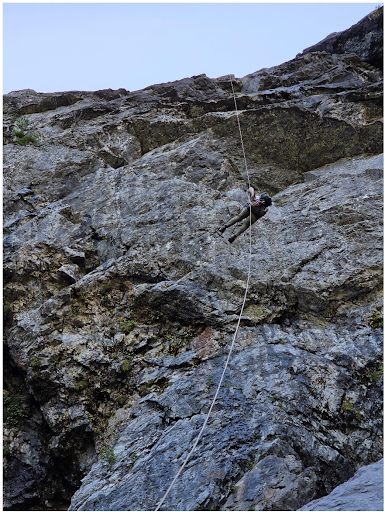
The two rescuers continued up to the main ledge to join the two others who had remained at the top managing the anchors. The top team had established another anchor using a very large boulder on the ledge that was in fall-line with the intermediate bolted anchor below, as well as directly underneath the point at which the connection to the helicopter could be made. From this anchor, the top team lowered a separate 200’ rope to the intermediate anchor. The climbing team then connected the top of the 600’ rope to the bottom of this 200’ rope, creating an 800’ line from the subject to the top anchor. The climbing team cleaned the intermediate anchor, ascended the original 200’ rope, and cleaned the remaining gear from the tree anchors.
The top team radioed back and informed the aircrew that the subject was rigged and ready for extraction. When the helicopter returned, the top of the 800’ connected ropes was attached to the helicopter’s 20’ short haul rope with a locking carabiner. The helicopter was then connected to the subject via 820’ of rope. After it was verified that all anchors were clear of the rope, the crew chief directed the Chief Pilot back and away from the main ledge until the crew chief could see that the rope system was well clear of the rock face. The subject was then lifted out of the couloir and flown about two miles away to the Skykomish airstrip. The helicopter returned to retrieve the four mountain rescue members.
This is an example of the complexities involved in conducting recovery operations where terrain prohibits the use of the rescue hoist (with 250’ cable). The success of the recovery operation highlights the benefits of planning, collaboration between the aircrew and mountain rescue team, scouting missions, technical proficiency, and a safety-oriented culture. SAR members involved expressed that they were grateful to have helped return the subject to the family.
Liz Louis and Dane Setzer are members of Everett Mountain Rescue. Bill Quistorf is with the Snohomish County Sheriff’s Office.