 Utah SAR Teams Paying Search and Rescue Members for Missions, Training
Summit County (Utah) Search and Rescue is the latest Utah team to start compensating members for their work. Because of a new statewide tax for emergency services that went into effect last year, the county, which includes Park City, is working on a plan to implement a tiered pay system for its volunteers. Grand County and Wasatch County SAR teams already have systems in place to pay members. Grand County, which borders Colorado and includes Arches National Park and Moab, pays an hourly rate for missions and trainings, according to Scott Solle, vice commander for the team. Wasatch County, just south of Summit, gives members a stipend of between $300 and $600 a month.
Summit is still figuring out an hourly rate and a tiered structure, but expects to pay members around $25 an hour for missions and trainings. “This won’t make anyone whole. It won’t be a job,” said Canice Harte, Operations Manager for Summit’s SAR team. “We are trying to respect the time they are putting in.”
And Summit members put in lots of hours. In 2025, the team’s volunteers logged more than 3,000 hours, more than double the amount in 2024. There are still unanswered questions the county is working to sort out regarding insurance, worker’s compensation coverage, pay raises and other decisions that need to be made, Harte said. The county expects the sales tax to add $16 to $18 million to the annual budget, Harte said. The tax revenue is meant to offset the impact of tourism and can be used for fire prevention, emergency medical service, search and rescue, law enforcement and other uses.
Wasatch offers a stipend to members as a way to help defray the costs of equipment and training, said Kam Kohler, commander of the team. “We wanted to acknowledge that you spend a lot of money on SAR and we wanted to give back,” Kohler said. Wasatch has had the reimbursement program for the past four years, and the monthly amount varies based on skills.
New “Exoskeleton” Technology being Offered to SAR Teams
Hypershell is a new device offering wearable robotics that assist hikers, cyclists and others in moving faster and with less effort. The Chinese company is offering its device to SAR teams to try for free and provide feedback. MRA member team Weber County Search and Rescue has been testing the devices for about nine months and has used them twice on actual incidents. “It’s a really interesting device,” said Eli Whitman, Mountain Rescue Coordinator for Weber SAR. “They have a lot of potential.”
The device straps around the waist and extends down the thighs. It has a motor on each hip that assists the wearer in lifting their leg as they walk or hike, which is especially helpful going uphill. The idea is to give the wearer more strength and endurance than they have independent of the device, said Toby Knisley, Director of Global Communications for Hypershell. He said several SAR teams have requested more information and to test the device.
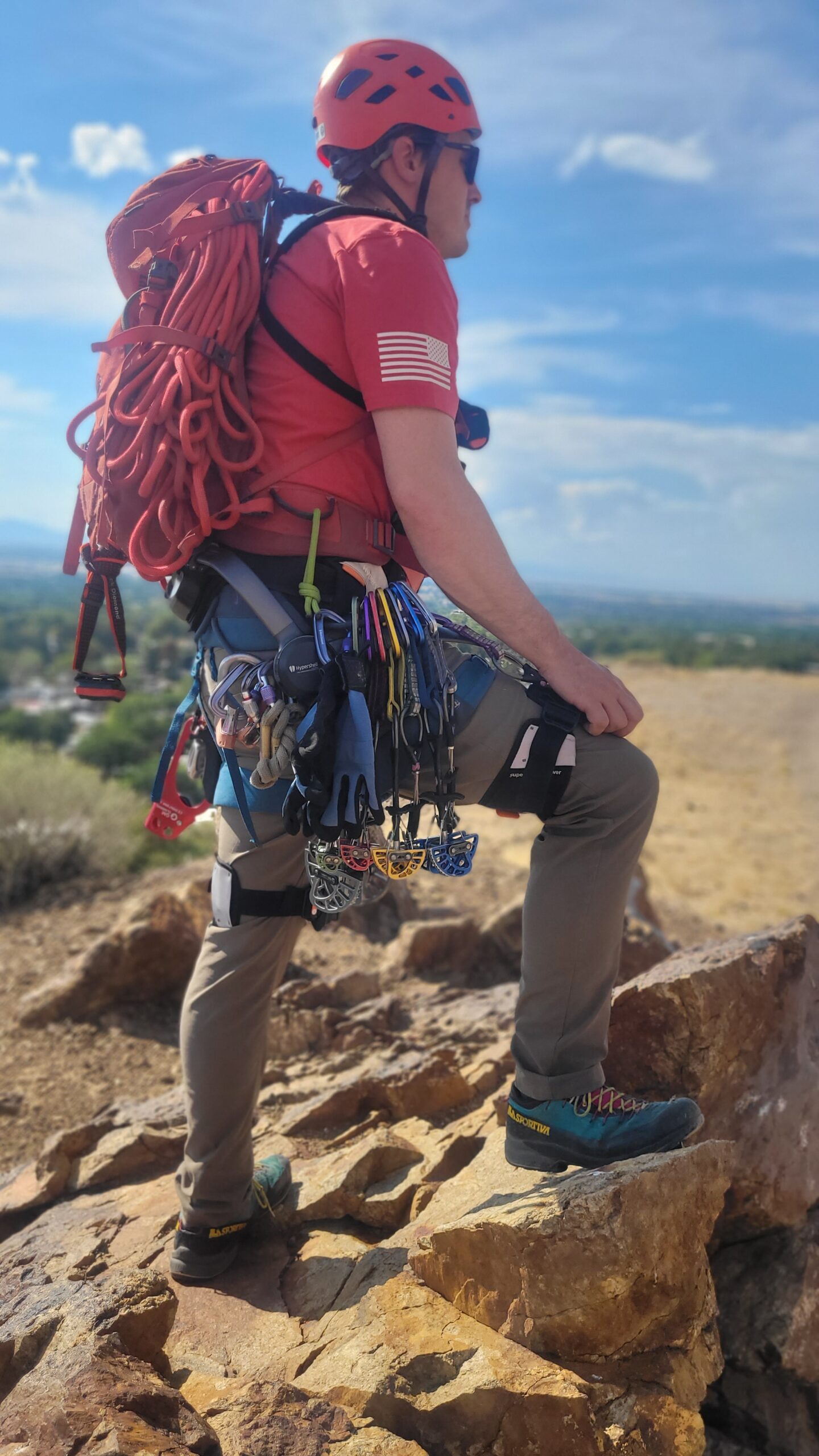
Whitman said a wide variety of team members have used the device in various weather conditions and liked it. The devices have held up well to heavy use, Whitman said. He said it can feel weird at first to use, and the wearer has to adjust other gear to make it fit properly. Knisley said people describe the feeling of Hypershell lifting their legs as having “puppet strings” attached to their thighs.
There are four different models, Knisley said. They are all the same structure, but they vary in materials and weight. The lowest cost model is aluminum and others are carbon fiber and titanium. Hypershell costs between $900 and $2,000, depending on the model. The company has sold 30,000 units to date. There is no weight limit to the device but there is a size limit on the waist, Knisley said, noting that smaller women in particular had trouble fitting into the device.
California Region Considering Options for MRA Representation
Some members of California Region of the MRA, which is comprised of 30 regular and associate teams across the state, are upset with changes made to the structure of the national MRA board in 2024, which were approved by a majority of MRA member teams. The region is considering proposals for further changes. As discussed in a previous Meridian article, MRA’s legal council recommended changes needed to bring the bylaws into compliance with state law. The change to the bylaws clarified that the “Membership” is the 71 regular teams and replaced a five-member Officers Committee with a new 12-member Board of Directors. The board now is made up of the nine directors, one elected by each region, and three national officers elected by the Membership.
At recent region meetings, California polled its members and had discussions about whether to propose any additional changes to alleviate some teams feeling disenfranchised. California also has seven ex-officio teams. The main concern from the region as a whole is that it does not have proportional representation on the board, according to team members. California represents nearly a third of the member teams of the national organization, but currently has only one vote on the board. The next largest region is Rocky Mountain with 15 member teams, which also has one board vote. Other regions are smaller and have more votes if one of their members is also an elected officer.
“It’s an active issue for California teams,’’ said Jeff Lehman, region chair of California and member of San Bernardino Cave and Technical Rescue Team. The California region informed the board in January that it was considering proposals for addressing the representational structure, but had no specific proposal to present at that time.
California teams will meet again in May and discuss the situation, Lehman said. He said there are three most likely options on the table: do nothing, split the region into more than one geographic region, or propose proportional representation on the board. Another option that has been raised but did not seem to have majority support is to leave the MRA and create a separate California organization, Lehman said. One issue with the current structure, Lehman noted, was that if there was a board decision that required a vote and there wasn’t consensus among the region’s teams about how to vote, it would be difficult for the region’s board representative to cast a single vote on behalf of the region.
“Moving to a 12-person Board of Directors has ensured every region now has a voice at the national level,” said Chris Ruch, Vice President of the MRA. “It has been a great stride forward in driving engagement across the MRA, and it is exciting to see the California Region putting thoughtful effort into how we can continue to make the MRA a better organization.”
California region members were polled late last year on a variety of questions about MRA membership, and of 134 individual responses, the most common benefit cited was access to pro deals and accreditation in a peer-reviewed process. When asked if California would benefit from a SAR organization of its own, 25% of respondents said yes and 55% said they did not know. Twenty percent said there would be no benefit to a separate organization.