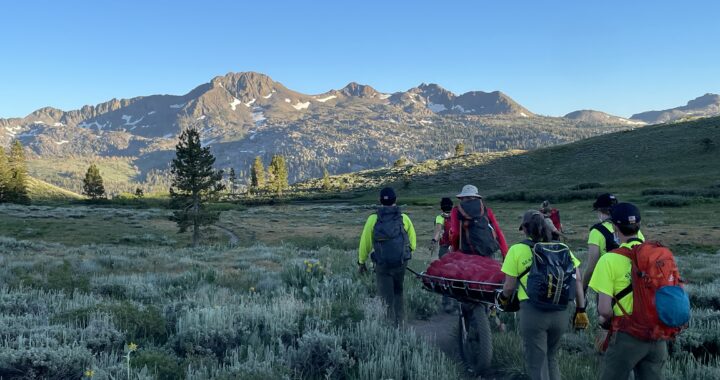
This summer, I was involved in the search for a missing hiker in the American River Gorge. It was nearing the end of a long day of searching, with temperatures approaching 100 degrees. As I waited to pick up a search team, I suddenly heard a call over the radio from a team on the opposite side of the canyon: “Emergency Traffic — incident within the incident.”
A member of the team had sustained a shoulder injury during a sliding fall in steep terrain. The caller calmly explained the circumstances, reported that they were in a very inaccessible location that would likely require helicopter evacuation, and provided their coordinates. Fortunately, another search team was nearby and was able to reach the injured volunteer and bring additional water. A helicopter was not initially available, but given the circumstances—an injured SAR volunteer in difficult terrain with limited options for a ground evacuation—a flight crew was brought in. Approximately an hour later, the Sheriff’s helicopter arrived and conducted a toe-in landing, extracting the injured volunteer and the remaining members of the team over several short flights.
What struck me most was how professional and composed the radio call had been.
The SAR volunteer assisting the injured team member had the critical information organized before making the call. She clearly communicated what had happened, the patient’s condition, their location, and what assistance they needed. This gave Incident Command the situational awareness necessary to quickly evaluate the urgency of the situation and begin coordinating the appropriate response.
I later interviewed Katie, the SAR volunteer who had treated the patient and called in the IWI. I asked about her training and preparation. She explained that several years earlier, a retired firefighter who was now one of her team leaders had emphasized the importance of training for emergencies involving SAR personnel in the field. Katie also recognized that when she made the radio call, many people on the incident would be listening. Rather than immediately transmitting incomplete information, she took a short amount of time to assess the situation and organize what she needed to communicate following the IWI protocol outlined in the IAP.
The patient was dealing with both a shoulder injury and the early stages of heat illness. The adjacent team brought freshly filtered water from the river and assisted with patient care while everyone waited for the helicopter. Because the team had trained for this type of emergency, a difficult situation was handled calmly and professionally, and the injured volunteer was safely extracted so definitive medical treatment could begin.
I have participated in several missions where teams experienced an IWI but were not adequately prepared. In some cases, the initial radio reports were confusing or incomplete, leaving Incident Command without a clear understanding of what had happened, where the team was located, the seriousness of the injury, or what resources were needed. That lack of situational awareness can delay assistance to an injured SAR member. An emergency involving one of our own should not be the first time a searcher—or an Incident Management Team—thinks through how an IWI will be handled.
The IWI concept used in wildland fire was strengthened following the 2008 Dutch Creek incident, in which a young wildland firefighter sustained a severe injury after being struck by a falling tree. The incident identified significant challenges involving communications, situational awareness, patient care, and coordination of the emergency response. The U.S. Forest Service subsequently used lessons from the incident to improve training and procedures for managing serious injuries involving personnel in the field. Mountain Rescue personnel frequently operate in environments very similar to those encountered by wildland firefighters: remote locations, difficult terrain, extreme temperatures, long operational periods, limited communications, delayed medical care, and complicated evacuation routes. SAR personnel can therefore face many of the same challenges when one of our own becomes injured.
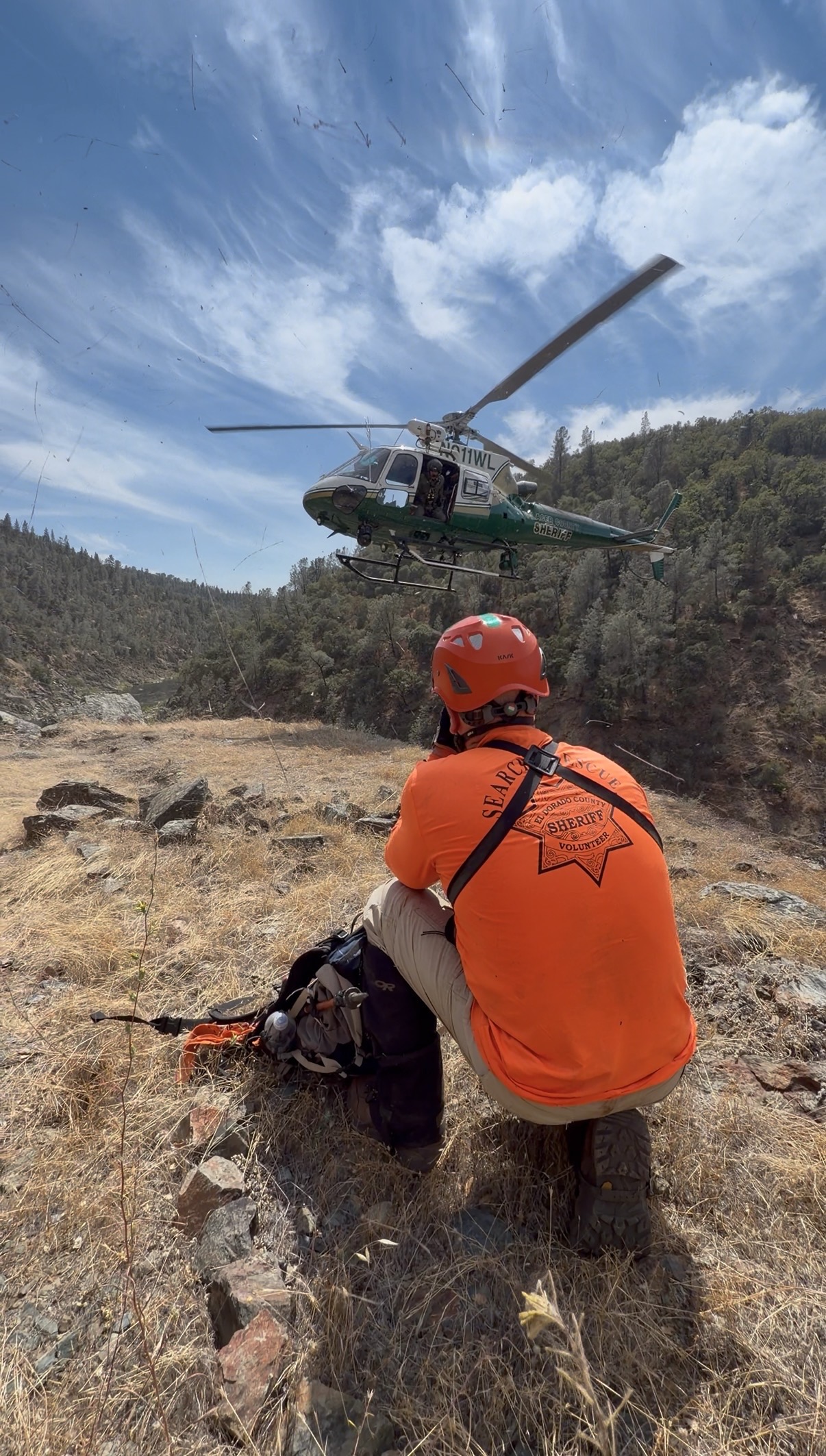
Proper handling of an Incident Within an Incident (IWI) requires training.
The lesson is straightforward: we need to train for the emergency within our emergency.
Training field personnel to manage an IWI does not have to be complicated. One of the most effective exercises is simply giving members a simulated emergency and having them work through the process of:
- Assessing the scene and ensuring scene safety.
- Conducting an initial patient assessment.
- Determining the urgency of the situation, life threatening or non-life threatening.
- Identify point of contact and lead medical assigned
- Identifying their exact location and best access.
- Determining what resources will be needed.
- Organizing the information.
- Calling the IWI into Communications.
The first time you conduct this type of training, it is not unusual to see people freeze or struggle to organize the information. After several evolutions, however, members generally become more comfortable assessing the situation and making a concise, organized radio report. That is exactly why we train.
Managing an Incident Within an Incident
When a significant injury or rescue occurs in difficult terrain, the Incident Management Team must quickly transition from managing the original search to simultaneously managing an emergency involving its own personnel. Minor injuries may require little more than routine medical care and transportation, but a serious injury in a remote location can rapidly develop into a complex rescue operation. The initial priority is to establish situational awareness and bring organization to the response. Logistical needs also increase quickly during an extended rescue. Water, food, medical supplies, oxygen, lighting, batteries, technical rescue equipment, and replacement personnel may all become necessary. Environmental conditions must be considered as well. Extreme heat or cold can create additional patients and may require more personnel so rescuers can rotate before fatigue begins to affect performance. One of the most common mistakes in planning a difficult ground evacuation is underestimating the number of people required. It is generally easier to release resources that ultimately are not needed than to discover several hours into an operation that there are too few rescuers to safely complete the evacuation.
The IWI cannot cause the Incident Management Team to lose track of the remainder of the original incident. Teams not involved in the rescue need clear direction. Depending on the circumstances, they may continue their assignments, hold their positions, assist with the rescue, or return to the ICP for demobilization. Accountability must continue until every resource has safely returned from the field. Risk should also be continually reassessed as the rescue develops. The objective throughout the operation remains constant: make decisions that move the patient toward definitive care while protecting the rescuers and preventing the IWI from creating additional emergencies.
Whether you are a field searcher, Team Leader, dispatcher, Operations Section Chief, or Incident Commander, preparation for an Incident Within the Incident is essential. SAR personnel routinely work in steep terrain, extreme weather, darkness, remote locations, and other environments where injuries can occur and outside assistance may be delayed. We spend countless hours training to locate and rescue the people we are searching for. We also need to train to rescue ourselves. The calm, organized response I heard over the radio in the American River Gorge was not an accident. It was the result of previous training and preparation. When one of our own is injured, that preparation can make all the difference.
Michael St. John is Unit Leader for Marin County Search and Rescue.