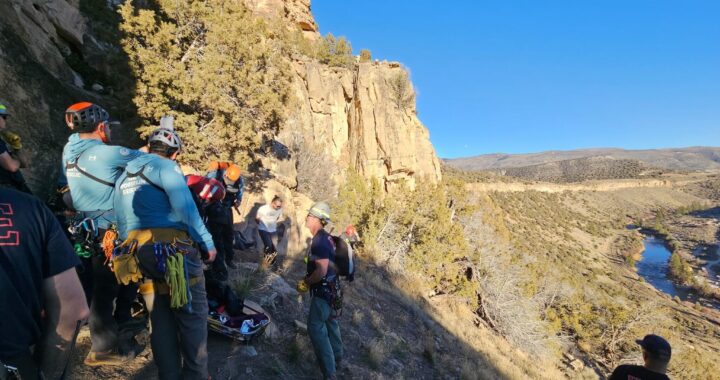
For many years, trauma patients in the backcountry have had few options when there was concern for significant bleeding and developing hemorrhagic shock, but with a rapidly expanding use of whole blood by EMS agencies across the country, that is starting to change. Grand County Emergency Medical Services launched its prehospital blood program in July and has seen an immediate impact, with crews providing blood three times in the first three months. Grand County EMS and Grand County Search and Rescue, near Moab in Utah, responded to a rescue in late September involving a traumatic injury and were able to provide a blood transfusion in the field for the patient. Vail Mountain Rescue also has seen how important it can be, as evidenced on a technical rescue last year.
The Case
Just after 2 p.m. on a warm and sunny November day in 2025 in rural Eagle County, Colo., Vail Mountain Rescue Group (VMRG) was paged for a backcountry medical mission at a popular climbing crag outside the town of Wolcott. A climber had fallen 40 feet and sustained significant injuries. As the team’s medical director and a full field member, I responded to the scene alongside seven VMRG rescuers to assist firefighters and SAR paramedics with the evacuation.
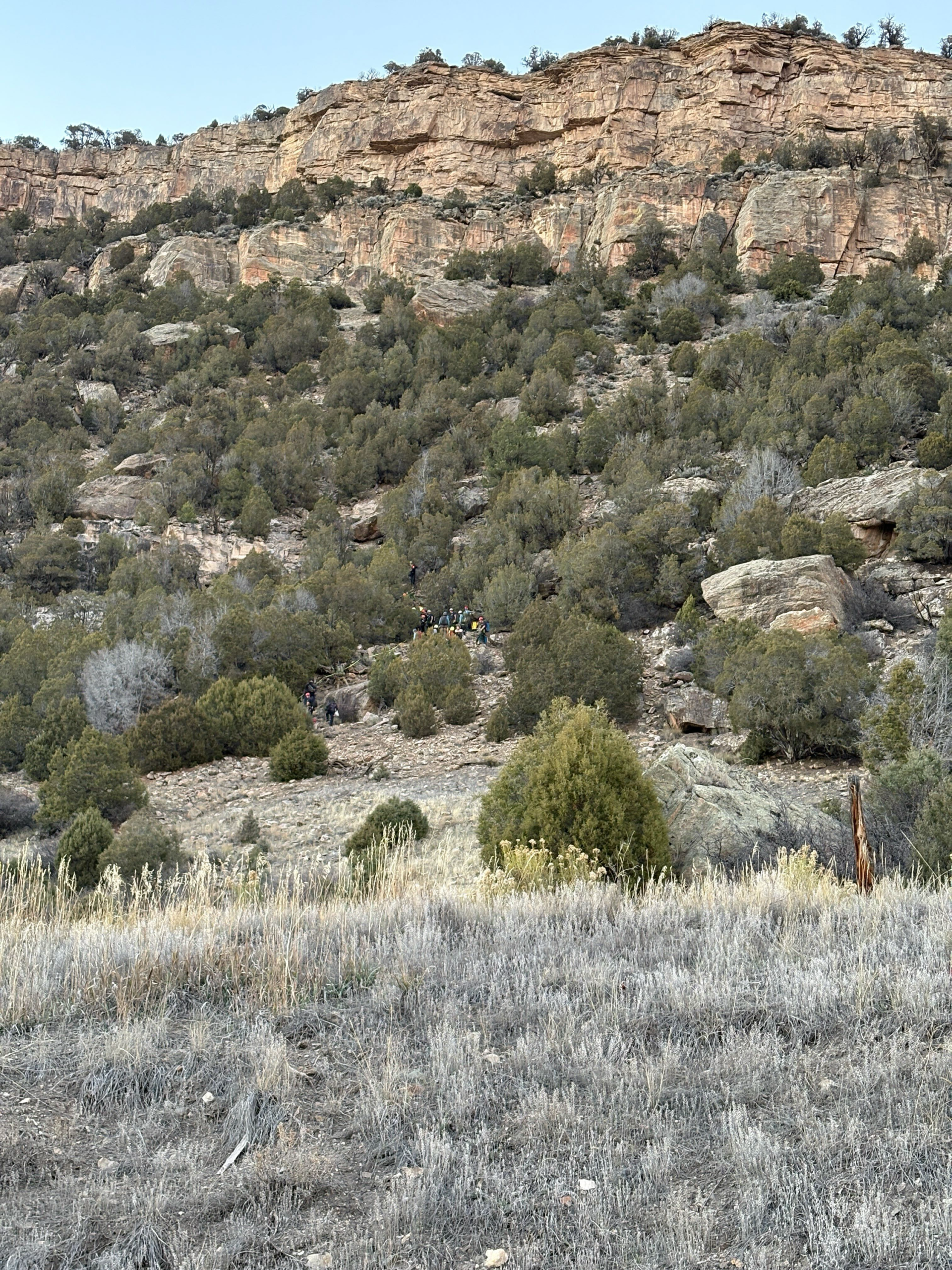
Overview of area. Photo: Chad Milam, Vail Mountain Rescue Group
An initial team of rescuers scrambled up a steep approach trail and made patient contact at the base of the cliff where she had fallen. After assessing the subject – a female in her 40s who was conscious and breathing but unable to walk, with significant injuries to her pelvis, shoulder and head – an evacuation plan was made: an extensive low-angle rope rescue litter carryout that would require multiple belay stations. Although I work as an emergency medicine physician at our local hospital, the patient was in great hands with the providers already on scene, so I embedded with VMRG rope rescue technicians on the scree field below and helped rig a second belay station so that we would have an efficient leap frog with the litter as the patient was transferred from one rope system to another.
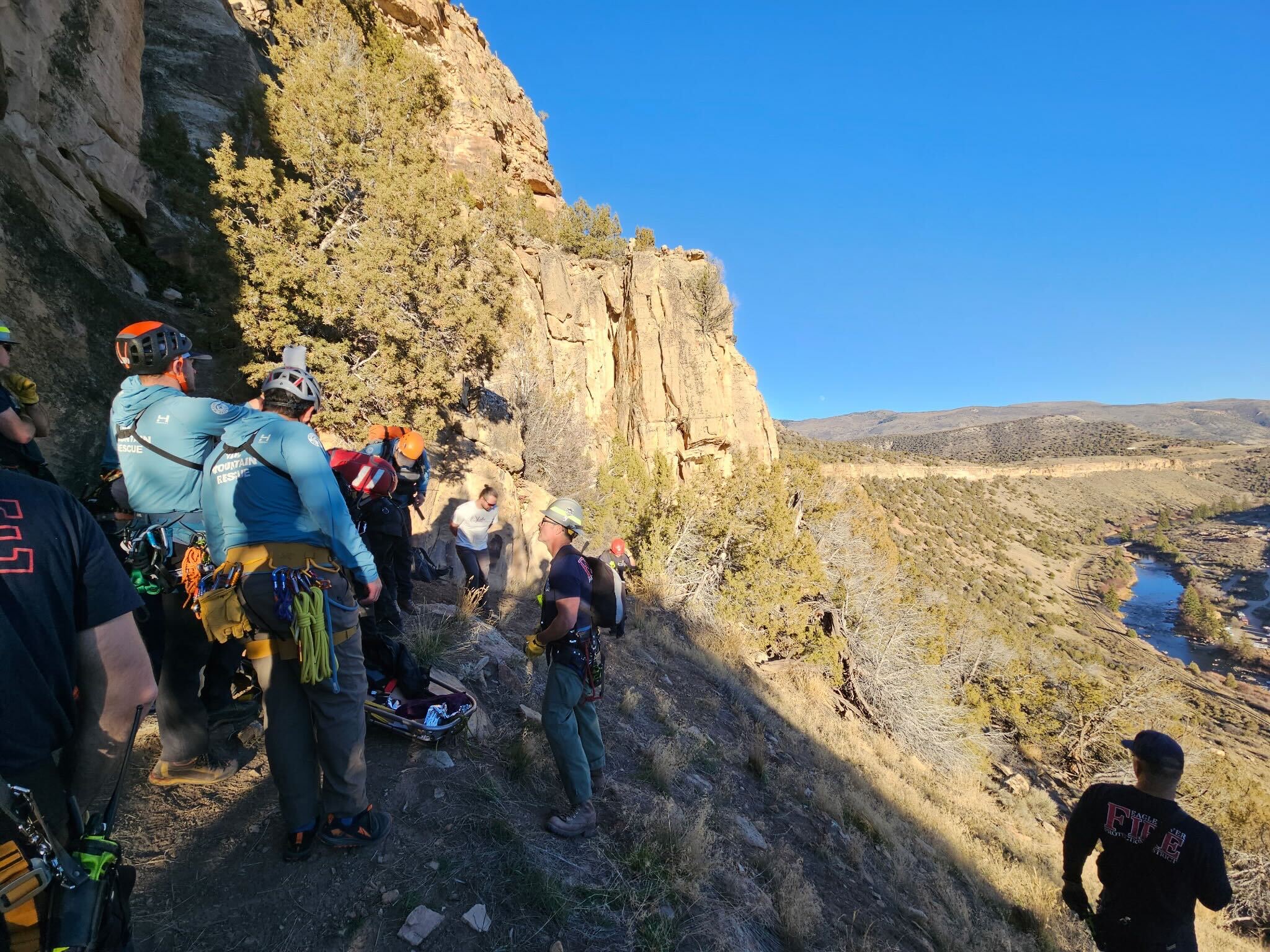
View from the site of the accident. Photo: Kara Greve, Vail Mountain Rescue Group
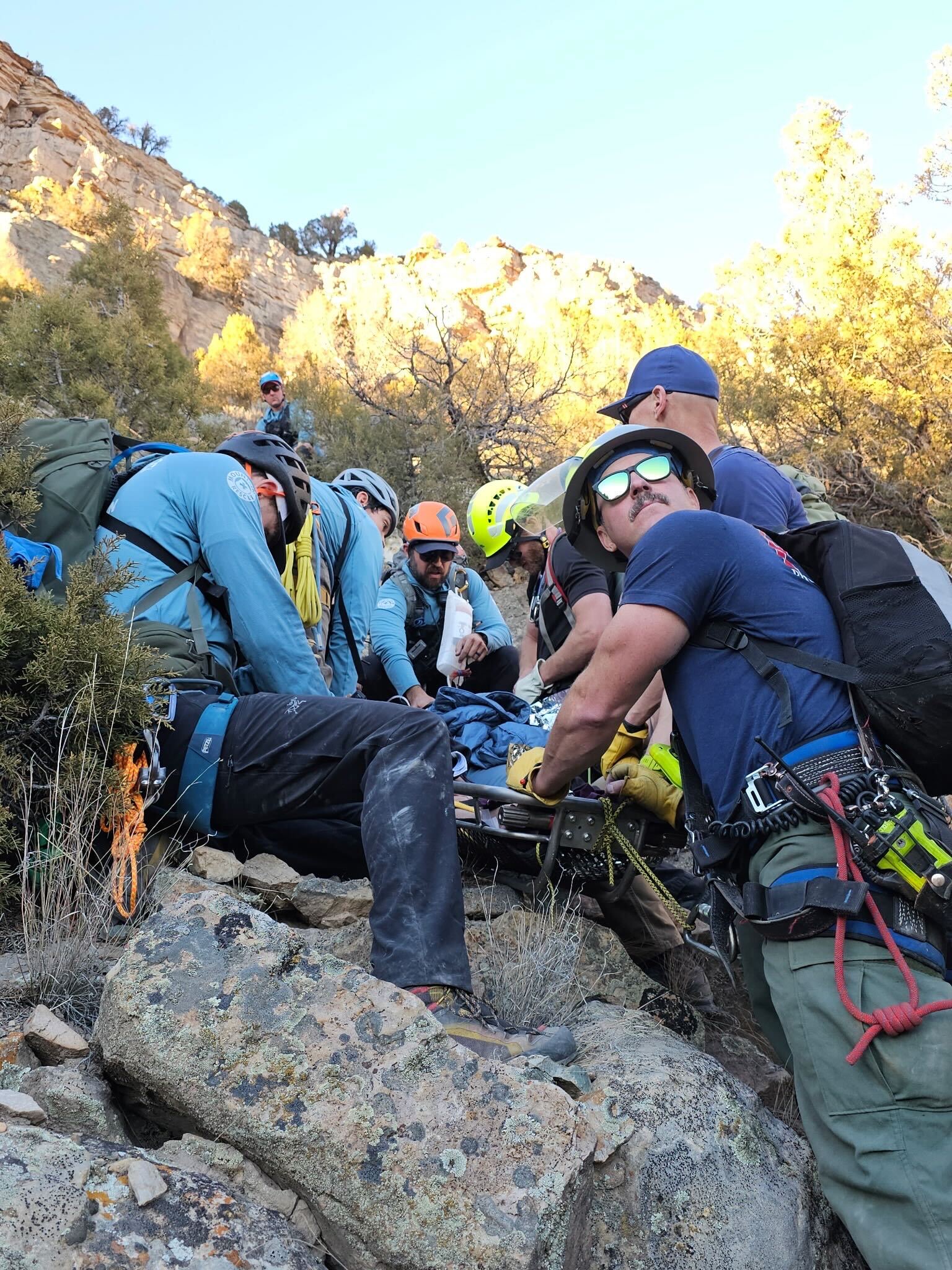
When the patient arrived at our belay station, I took one look at the subject’s ashen skin and knew she had started to decompensate and was now in a critical state. As the patient was being packaged for evacuation, her blood pressure had dropped to 80/50 and she was becoming somnolent. She was going into hemorrhagic shock. Then I looked up and saw that one of the paramedics was holding a white pressurized bag and squeezing a unit of whole blood into the patient. Fortunately for her, just a month earlier, Eagle County Paramedic Services had begun responding to critical patients with units of whole blood (stored in specialized coolers) that would allow SAR paramedics to begin advanced life-saving trauma care in the field.
For many years, trauma patients in the backcountry had few options when there was concern for significant bleeding and developing hemorrhagic shock, but now, with a rapidly expanding use of whole blood by EMS agencies across the country, that is starting to change. In the backcountry, many types of blunt and penetrating injuries can lead to significant blood loss. Once there is enough bleeding either externally or internally, shock starts to set in. When this happens, the body will start trying to compensate for blood loss by shunting blood from less important areas of the body (such as hands and feet) to vital areas (such as the heart, lungs, and brain). As blood is shunted from the extremities to the body’s core, areas with decreased blood flow will start to lose warmth, which can lead to hypothermia, while lactic acid normally metabolized by the body begins to build up (a condition known as acidosis).
In a compensated shock state, traditionally the patient’s heart rate starts to increase and skin will become cool to the touch, but the patient’s mental status and blood pressure should still be close to normal. As bleeding continues, the body will eventually stop being able to compensate for the blood loss and shift to a decompensated state of hemorrhagic shock. This means the vital organs are no longer able to receive the necessary blood flow. When this happens, the patient will have altered mental status and become hypotensive, with an abnormally low blood pressure reading, typically below 90/60 mm Hg for an adult. A patient in this more critical condition can be more difficult to manage because of their altered mentation. Patients in hemorrhagic shock need two major things to survive: they need the bleeding to stop and they need to receive blood product resuscitation.
Trauma Triad of Death
For patients suffering from hemorrhagic shock, three interconnected underlying conditions can eventually lead to death if not corrected: hypothermia, acidosis, and coagulopathy. We know that a patient in hemorrhagic shock can become hypothermic from both environmental factors as well as from blood loss. When the body is hypothermic, its ability to form blood clots is inhibited because the proteins that enable clotting cannot function properly at colder temperatures. We also know that blood loss and decreased oxygen delivery to cells in the body leads to acidosis. Blood clotting components require a stable blood pH to function normally. The combination of hypothermia and acidosis contribute to a condition known as coagulopathy, when the body’s normal ability to form clots to control bleeding becomes impaired or ceases to function. As coagulopathy worsens bleeding also worsens, and the vicious cycle continues, either until death or until interventions stop or reverse the cycle.
Blood Products in Trauma
When someone donates blood, it comes out as whole blood, which means it contains all of the normal components of blood that we all have circulating through our bodies. After donation, whole blood typically is broken down into three main separate products that hospitals and critical care EMS crews can use to treat patients with very specific needs: packed red blood cells, which increase the blood’s oxygen-carrying capacity; fresh frozen plasma, which increases circulating blood volume and contains important clotting factors; and platelets, which initiate blood clots. Whole blood contains all of the components needed to treat patients with massive hemorrhage and hemorrhagic shock and it is more practical to administer in the field because it is readily available, relatively easy to store, and generally more compatible. For those reasons, it is becoming an advanced treatment that SAR paramedics and other qualified first responders can offer to patients with concern for massive hemorrhage in the backcountry. About 10 years ago, very few ground-based EMS agencies carried whole blood. Two years ago, that increased to about 150 agencies, and now there are more than 400 agencies.
Goal of Trauma Resuscitation
Understanding what the components of blood are and their uses is only a portion of knowing when and how to treat a critical patient. For a long time, IV fluids (such as normal saline and Lactated Ringer’s) were administered as the primary treatment in the field to resuscitate trauma patients, with the goal of increasing the patient’s blood pressure and adding circulating volume. We now know these fluids can cause problems in trauma patients. Normal saline causes the blood to become more acidic, which worsens the ability to clot. The fluid does add more circulating volume, but does not add the important elements like red blood cells or clotting factors and therefore dilutes out what does still remain. And finally, it can help to increase the blood pressure, but if the patient is not at definitive care, this increased pressure can cause an already tenuous clot to pop off and worsen bleeding. Even when blood is available to transfuse, the goal in a patient without severe head or spine trauma is a pressure that is good enough to protect the vital organs without compromising clotting. This is called permissive hypotension, with a general goal blood pressure of about 90 systolic, until bleeding has been controlled.
Hemorrhage Treatment in the Backcountry
In the backcountry, when whole blood is unavailable, there are basic treatments first responders can initiate to help patients with suspected massive hemorrhage. If there is evidence of external bleeding, apply direct pressure, packing, a pressure dressing, or a tourniquet as needed. Immobilize suspected long bone fractures. Place a pelvic binder for suspected pelvic instability. But for a patient who has a mechanism or physical exam concerning for significant internal bleeding, hemostasis (the ability to control or stop bleeding) may not be able to be achieved until arrival at a hospital. Therefore, initiating rapid extrication as safely as possible is extremely important, as is prevention of associated hypothermia. Even in warm weather, if a patient is losing blood, they can develop a hypothermic state which can worsen their body’s ability to clot, therefore focusing on the patient’s warmth is a vital intervention to perform in the field. If whole blood is available, it can be used in the field, in addition to all of the other conservative treatments noted above, to help stabilize the patient long enough to reach definitive care.
Patient receiving blood infusion. Photo: Kara Greve, Vail Mountain Rescue Group
Case Resolution
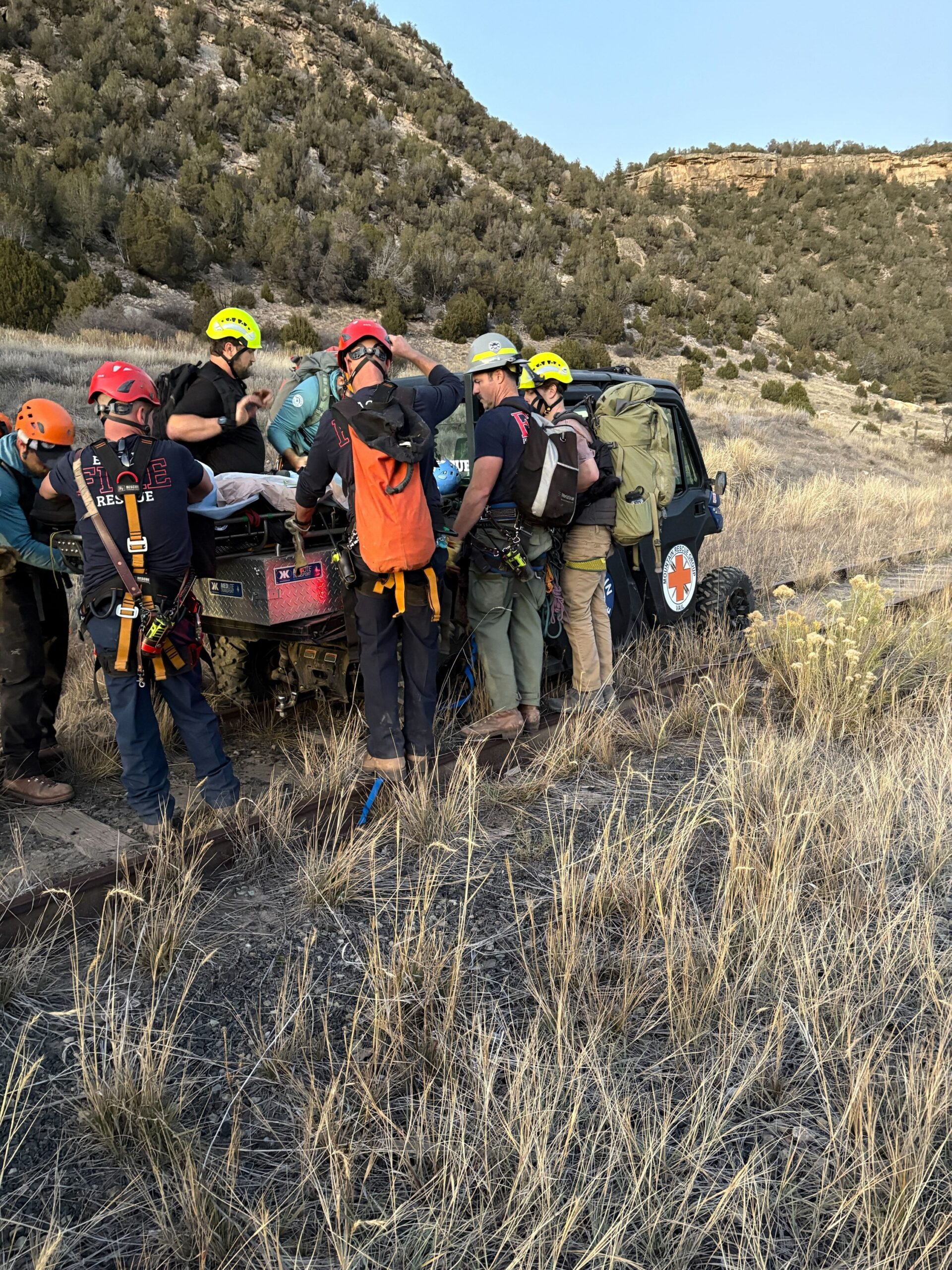
The patient received one unit of whole blood during her prolonged transport down. As the sun was setting and the temperature dropped, aggressive warming was initiated to control hypothermia. By the time the patient was handed off to the critical care flight crew at a roadside landing zone, her blood pressure had returned to a normal level, her heart rate was improving, and her mental status had improved. Upon arrival at the hospital, a full trauma evaluation identified multiple injuries, including multiple pelvic fractures with a moderate-sized pelvic hematoma (collection of blood internally), which was likely the cause of her instability; luckily the bleeding had stopped on its own and did not require surgery. Because of the whole blood that the patient had received in the field, she suffered no concerning complications related to hypotension (low blood pressure). After a short stay in the hospital, she made a full recovery.
Dr. Gregory Wiener is a field member and Medical Director for Vail Mountain Rescue Group.
Patient being transferred to UTV for transport. Photo: Chad Milam, Vail Mountain Rescue Group